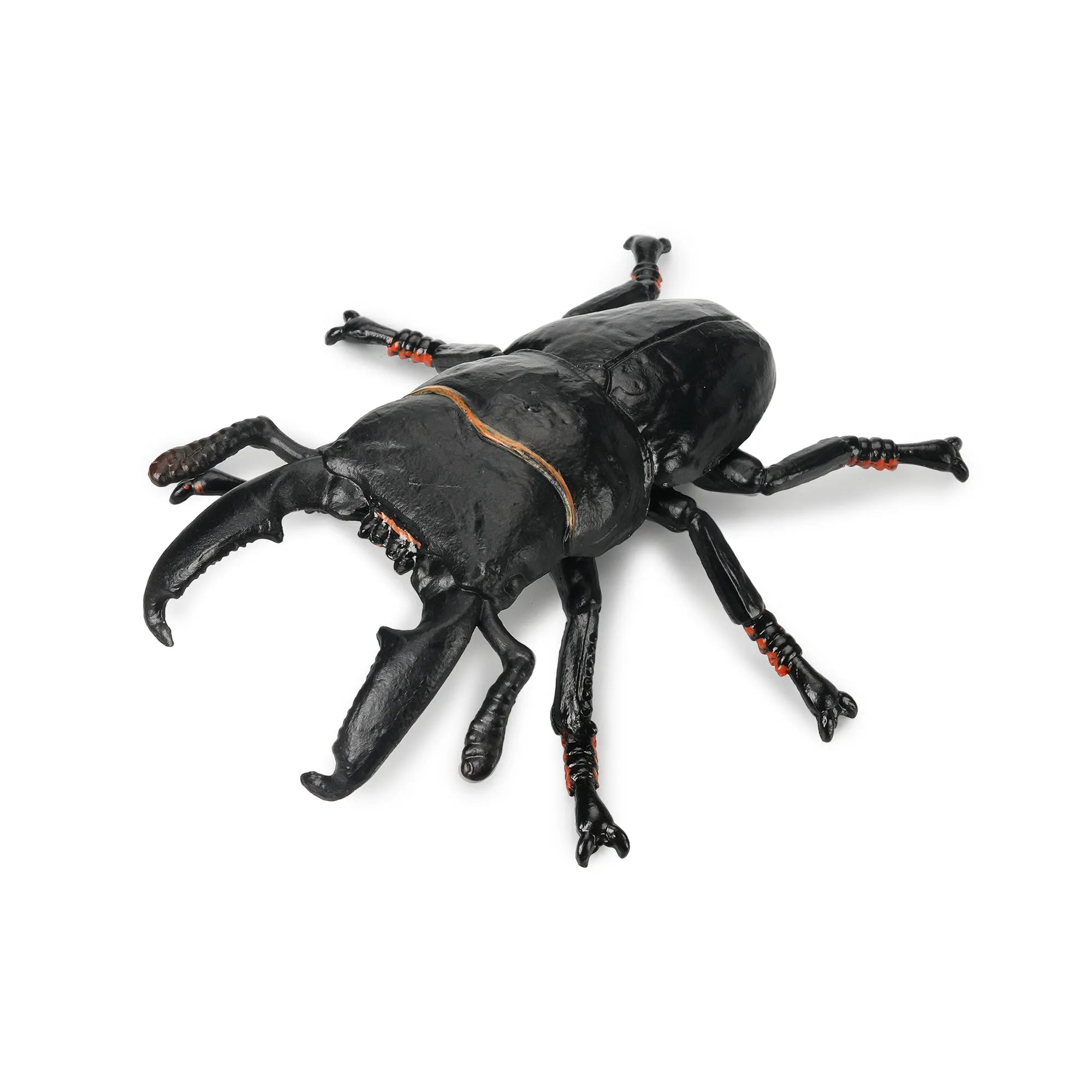
The Giant Stag Beetle is one of the largest beetles, known for its massive antler-like mandibles used by males in combat. These beetles are found across various regions, including Europe and parts of Asia, feeding on tree sap and decaying wood.
Males engage in battles using their large mandibles, often wrestling for mates or territory. They are nocturnal, attracted to light and decaying wood, and primarily feed on sap, rotting plant material, and fruits.
Breeding
Females lay eggs in decaying wood or tree trunks, where larvae hatch and feed on decomposing material. The larvae take several years to mature before pupating and emerging as adults, typically after 2–5 years, depending on the species.
Characteristics
Known for their large, impressive mandibles, male Giant Stag Beetles are much larger than females. Adults range in size from 3–8 cm (1.2–3.1 inches) depending on species, with a sturdy exoskeleton and strong hind legs used for climbing.
History
Giant Stag Beetles are distributed across various regions, with the European species (Lucanus cervus) being the most famous. They have long been a subject of entomological study due to their impressive size and role in forest ecosystems as decomposers.
Current Status
Giant Stag Beetles are not universally threatened, but some species, particularly in regions with habitat loss or degradation, are at risk. Conservation efforts focus on protecting forest habitats and preserving decomposing wood for larval development.