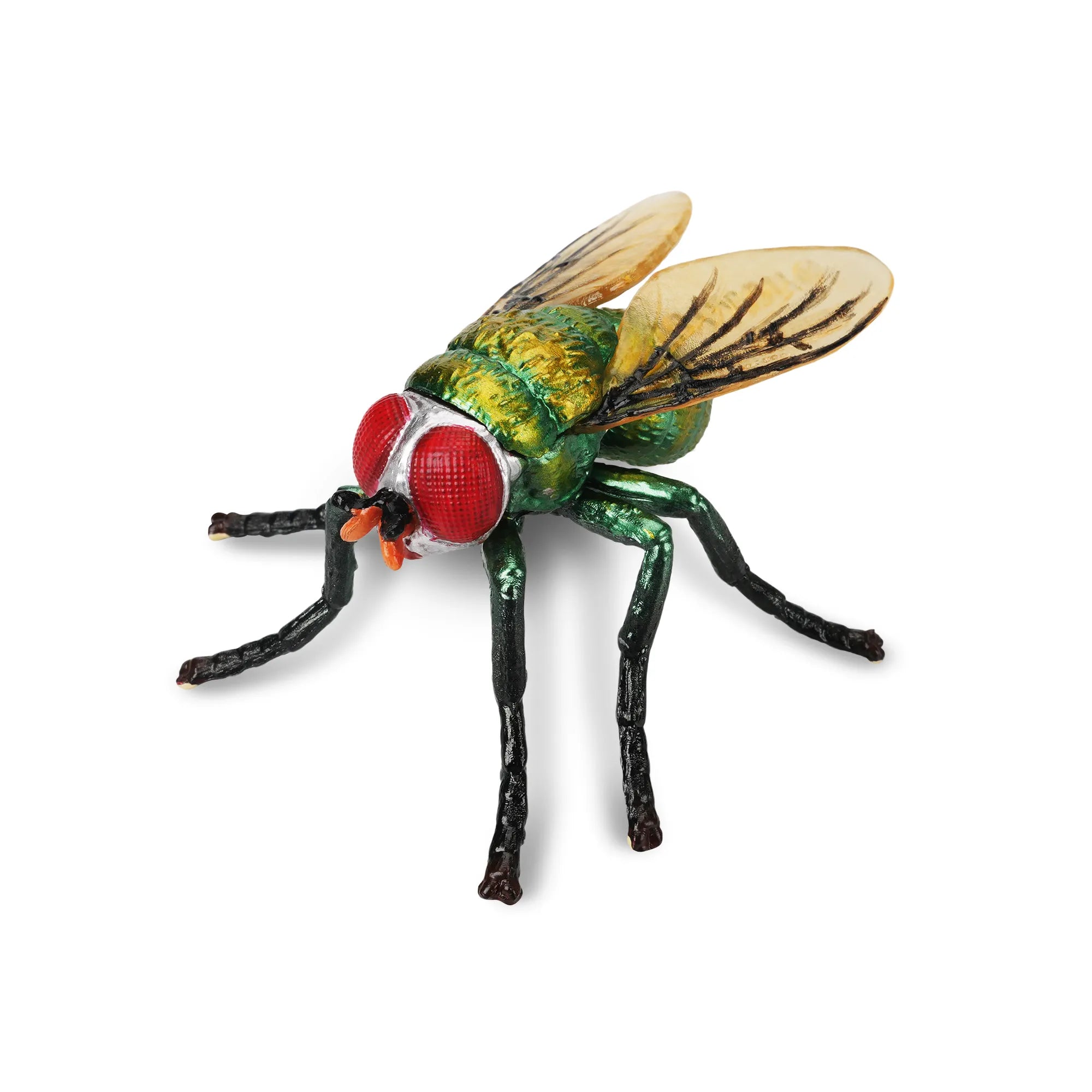
The green bottle fly is a metallic green fly known for its scavenging behavior, particularly feeding on decaying organic matter and carcasses. Its distinctive green coloration and rapid reproductive cycle make it an efficient decomposer and a key species in forensic entomology.
Green bottle flies are attracted to decaying organic material, where they lay their eggs. The larvae (maggots) feed on the decomposing material, playing a crucial role in nutrient recycling. They are also known for their rapid reproduction and can infest carcasses quickly.
Breeding
Females lay their eggs on decaying meat or other organic material, and the larvae hatch and feed on the tissue. The development from egg to adult is relatively fast, often completing within 10–14 days, depending on environmental conditions.
Characteristics
Adults are about 8–14 mm long, with a shiny green metallic body and large red eyes. They have a distinctive buzzing flight pattern, and their larvae (maggots) are commonly used in medical treatments for wound debridement.
History
Native to Europe and now widespread globally, the green bottle fly has been studied for its role in decomposition and its utility in forensic science. It is also used in medical treatments where larvae are applied to clean wounds by feeding on necrotic tissue.
Current Status
Green bottle flies are not considered endangered and are common in many parts of the world. However, they are controlled in some regions due to their role as pests and their potential to spread diseases through their larvae.