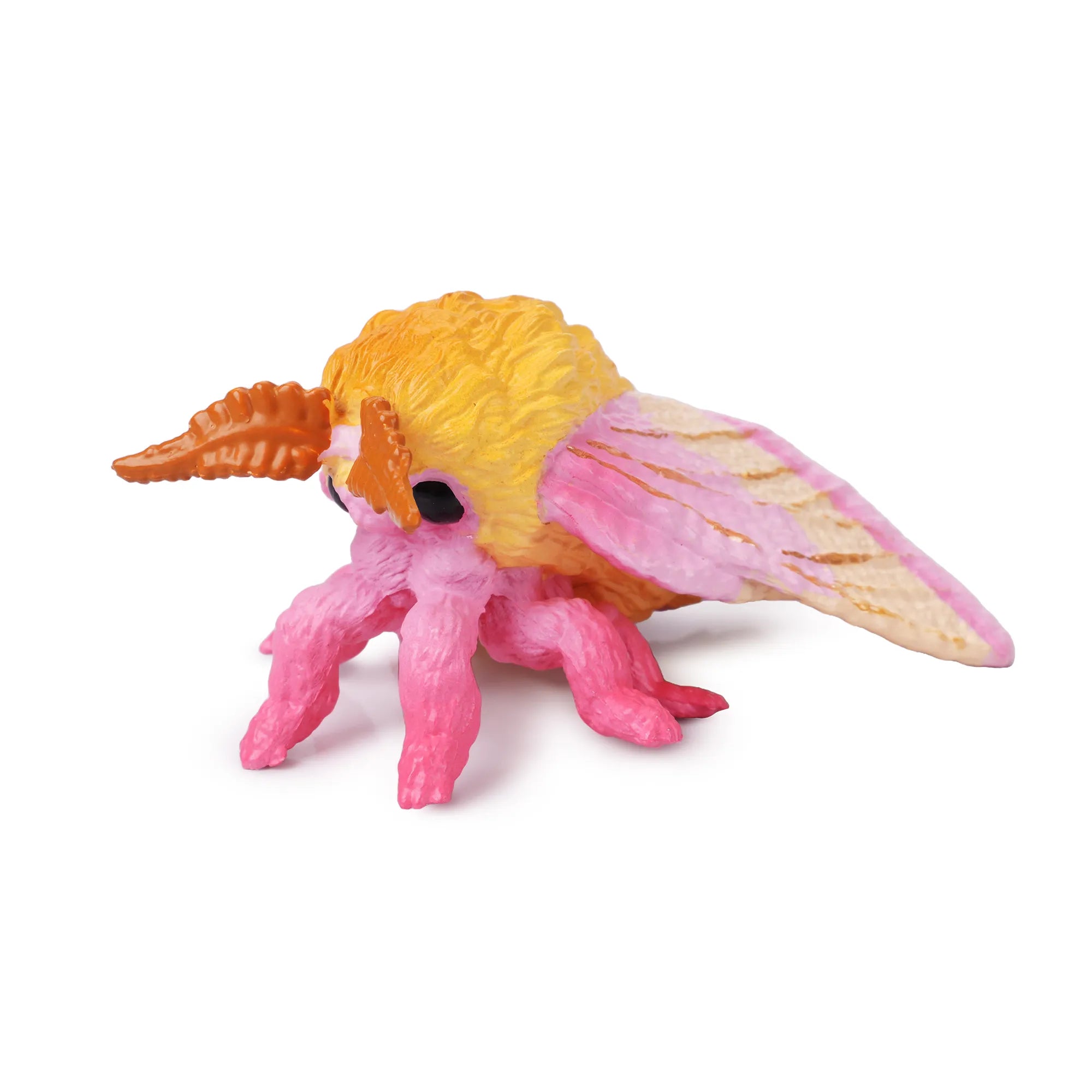
The Rosy Maple Moth is a striking, colorful moth with soft pink and yellow wings, often found on maple trees. It has a fluffy appearance, with a wingspan of 3–4 cm, and is primarily nocturnal, feeding on tree sap and nectar.
Rosy Maple Moths are nocturnal and are attracted to light at night. They are not aggressive and spend most of their adult life in search of mates and suitable places to lay eggs on host trees like maples.
Breeding
Females lay eggs on the leaves of various maple species, where the larvae hatch and feed on the leaves before pupating. The caterpillars are green and well-camouflaged, transforming into moths after pupation.
Characteristics
The moth has a distinct appearance, with vibrant yellow forewings and soft pink hindwings. Its body is covered in fine, furry scales, and it has long, feathery antennae, which are typical for moths in the family Saturniidae.
History
Native to North America, the Rosy Maple Moth is found primarily in the eastern United States and southern Canada. It has been recognized for its beautiful coloration and is often observed by entomologists and nature enthusiasts.
Current Status
The Rosy Maple Moth is not currently considered endangered and is fairly common in its range, especially in areas with abundant maple trees. However, it may face habitat threats from deforestation and urbanization.