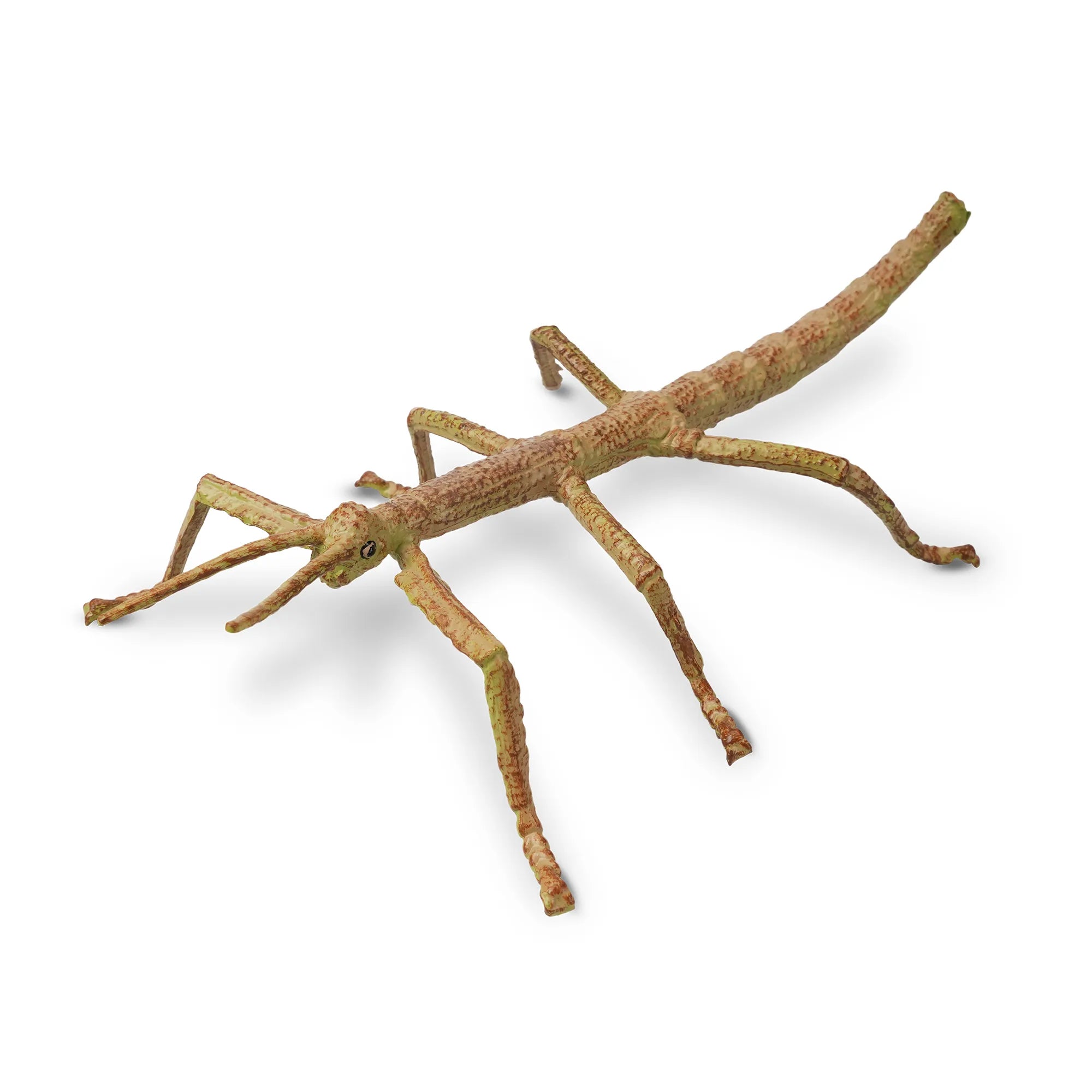
Stick insects are masterful camouflaged insects that resemble twigs or branches, using their appearance to blend into vegetation and avoid predators. They come in various sizes, with long, slender bodies, and can range in color from brown to green, depending on the species.
Stick insects are primarily nocturnal and herbivorous, feeding on leaves and other plant material. They rely heavily on their camouflage to avoid predators, and some species can shed limbs or secrete a foul-smelling fluid as a defense mechanism.
Breeding
Females lay eggs that resemble seeds or small plant parts, which hatch into nymphs that resemble adults but are smaller and wingless. Depending on the species, the lifespan and development from egg to adult can vary, with some species taking several months to grow.
Characteristics
Stick insects have long, thin bodies, long legs, and antennae, often with large, leaf-like wings in some species. They possess excellent camouflage abilities, blending in seamlessly with their environment.
History
Found primarily in tropical and subtropical regions, stick insects are ancient creatures, with fossil records dating back over 100 million years. They have been kept as pets due to their fascinating appearance and relatively easy care.
Current Status
Stick insects are not considered endangered, though some species face threats from habitat loss and the pet trade. Many species are protected in their natural habitats, and efforts are made to preserve their environments.