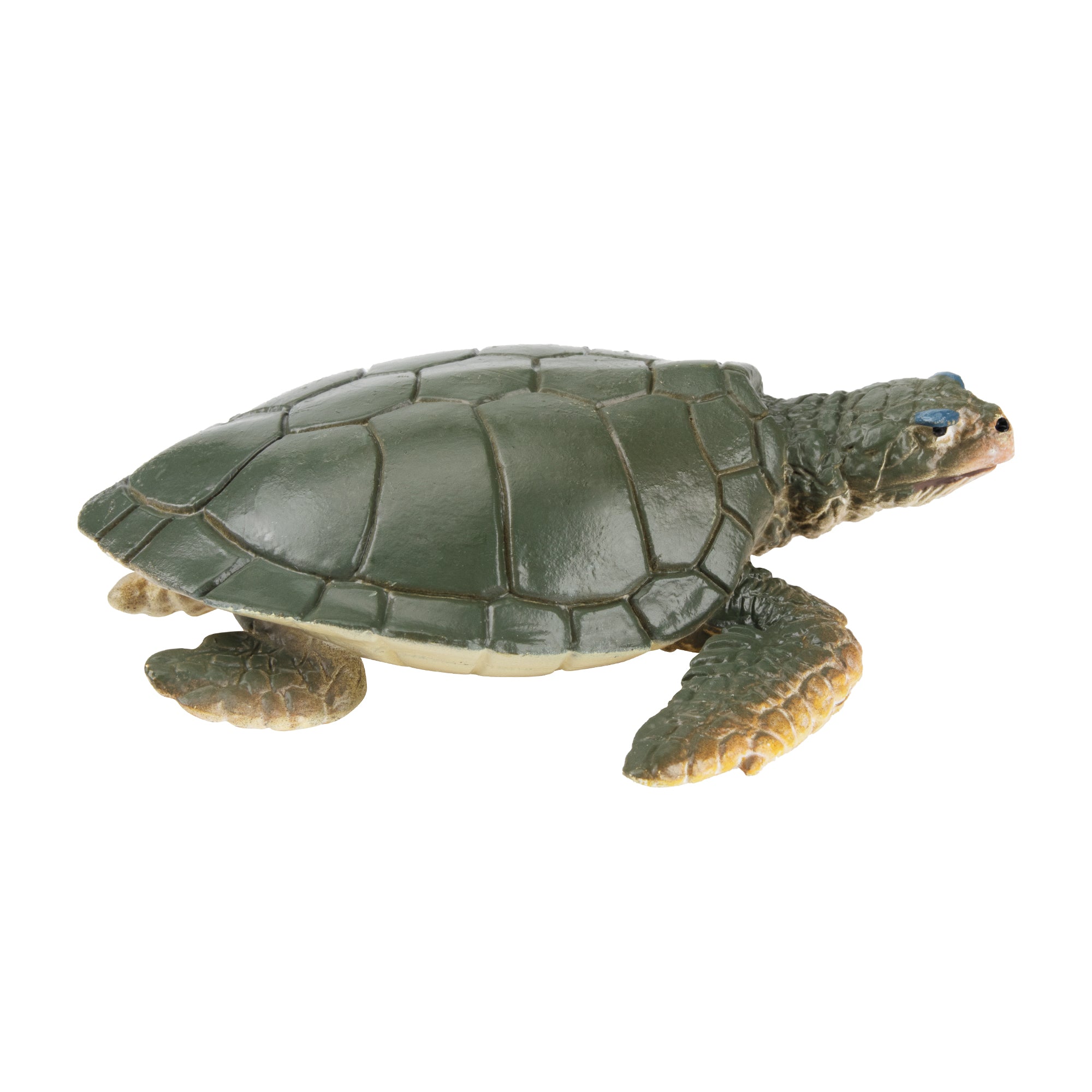
The flatback sea turtle is a medium-sized marine turtle with a distinctive, flattened carapace and a pale greenish-gray color. Native to the coastal waters of Australia, it is the only sea turtle species whose distribution is confined to the Indo-Pacific region.
Flatback sea turtles are primarily found in shallow waters and are mostly solitary. They feed on a variety of organisms, including jellyfish, crustaceans, and soft corals, and are known for their less migratory nature compared to other sea turtles.
Breeding
Flatback turtles nest in sandy beaches along northern Australia, where females return every 2–3 years to lay their eggs. After an incubation period of around 50–60 days, the hatchlings emerge and head for the ocean.
Characteristics
The flatback turtle is known for its relatively flat and smooth carapace, which is olive-gray or greenish in color, and its slightly pointed head. It is the smallest of the sea turtles, with adults growing to about 1 meter in length and weighing up to 80 kilograms.
History
Endemic to the coastal regions of northern Australia, Papua New Guinea, and surrounding islands, the flatback sea turtle has been less studied than other species, though it plays a critical role in the local marine ecosystem.
Current Status
The flatback sea turtle is listed as Data Deficient by the IUCN, which means that there is not enough information to determine its population status. It faces threats from habitat loss, human disturbance, and climate change affecting its nesting sites.