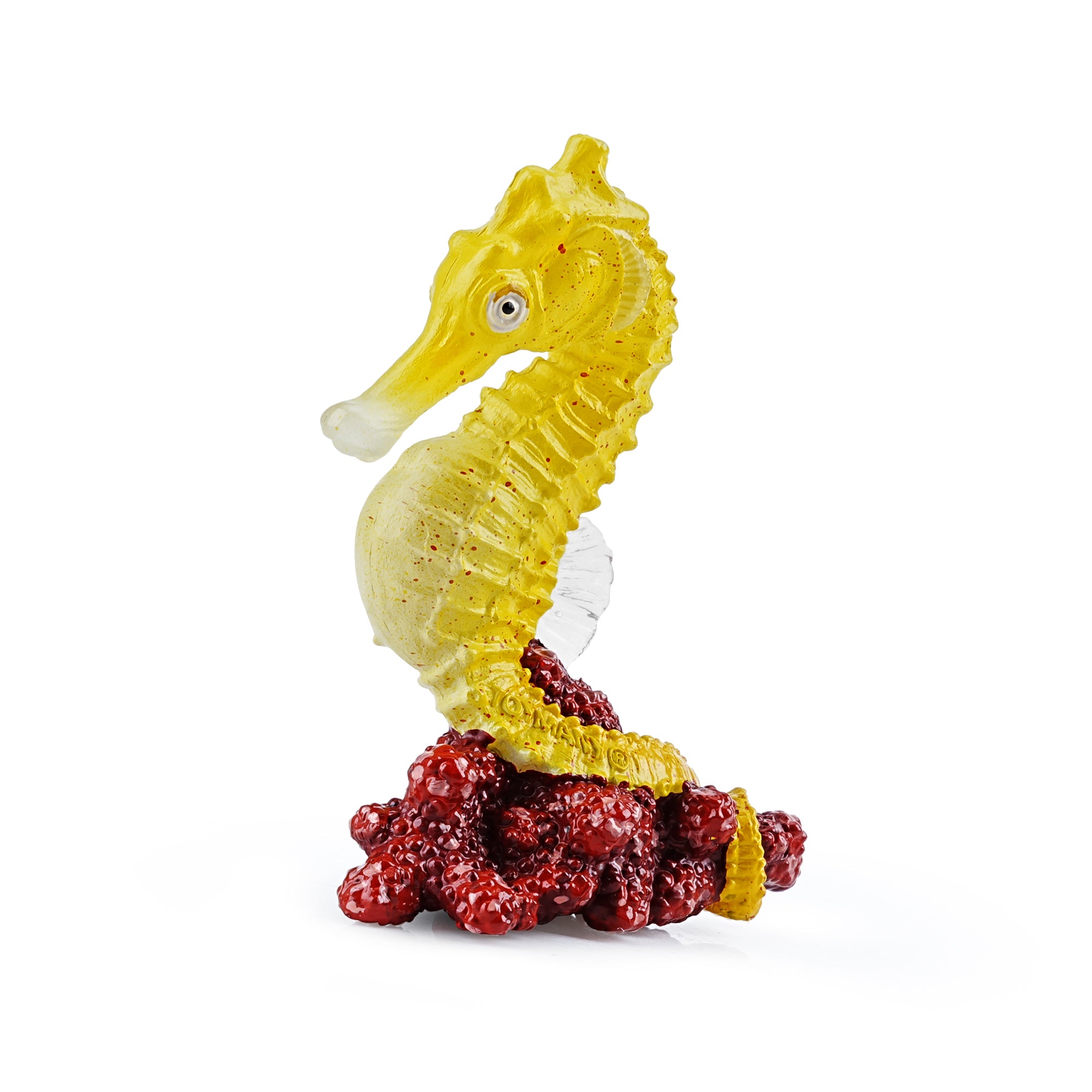
Seahorses are small, uniquely shaped fish recognized for their curled tails, horse-like heads, and upright swimming posture. Their delicate appearance and ability to camouflage make them highly distinctive among marine species.
Seahorses are poor swimmers, relying on their dorsal fin to propel them and their prehensile tails to anchor onto seagrass, corals, or mangroves. They are generally solitary or found in pairs, feeding on tiny crustaceans by rapidly sucking prey into their snouts. Many species form monogamous bonds, engaging in daily greeting rituals to maintain pair connections.
Breeding
Seahorses have one of the most unique reproductive systems in the animal kingdom: males carry the pregnancy. Females deposit eggs into a specialized brood pouch on the male, where he fertilizes and incubates them until giving birth to fully formed miniature seahorses. Brood sizes can range from a few dozen to over a thousand, depending on the species.
Characteristics
Seahorses have bony plates instead of scales, providing protection while allowing flexibility. Their eyes move independently, enabling them to scan for prey and predators simultaneously. Many species can change color to blend into their surroundings for camouflage or communication.
History
Seahorses inhabit shallow coastal waters worldwide, especially in seagrass beds, coral reefs, and mangroves. They have long appeared in mythology, art, and traditional medicine, particularly in Asia, contributing to their cultural significance.
Current Status
Many seahorse species are threatened due to habitat loss, pollution, climate change, and overharvesting for the aquarium trade and traditional medicine. Conservation efforts include marine protected areas, sustainable trade regulations, and habitat restoration to support declining populations.