
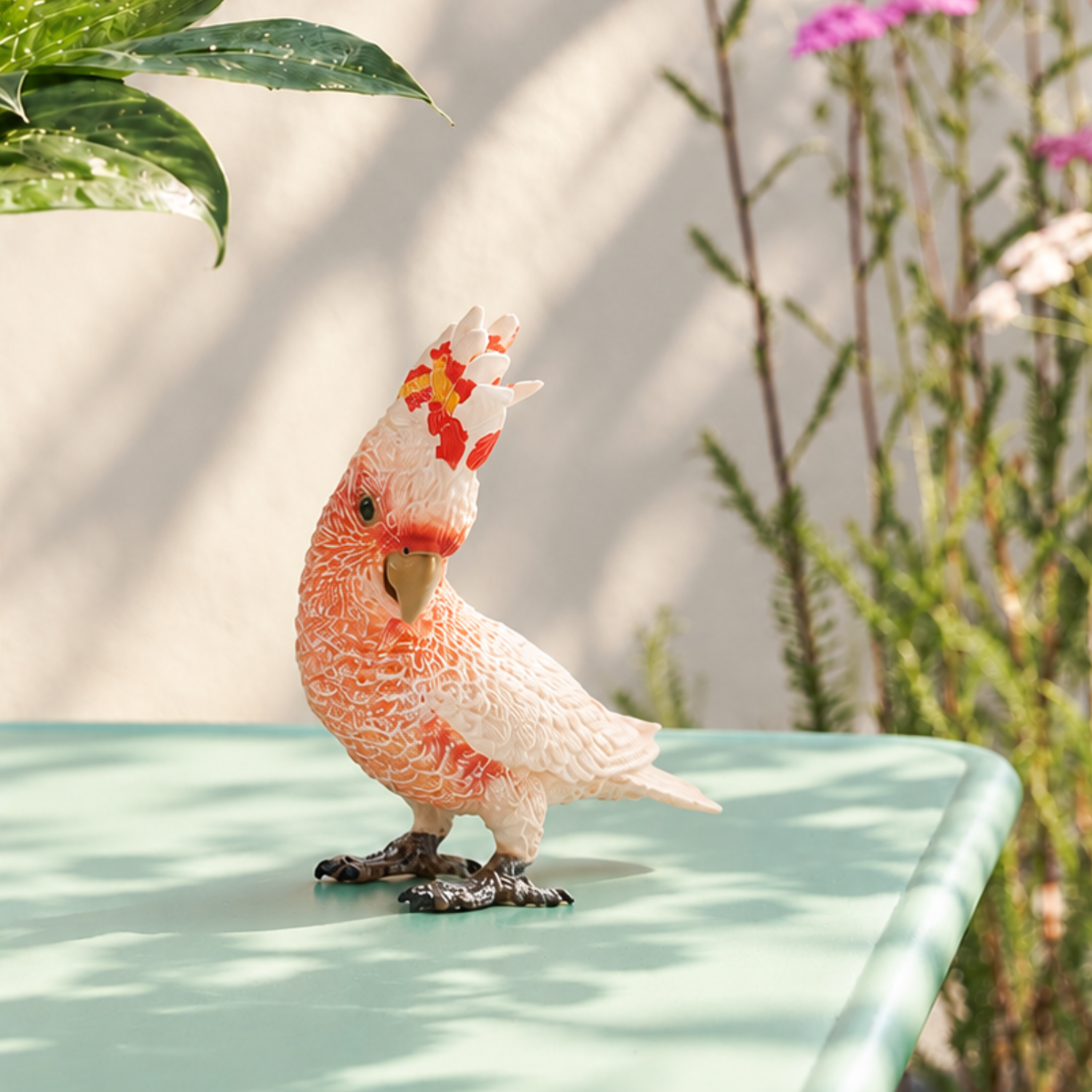
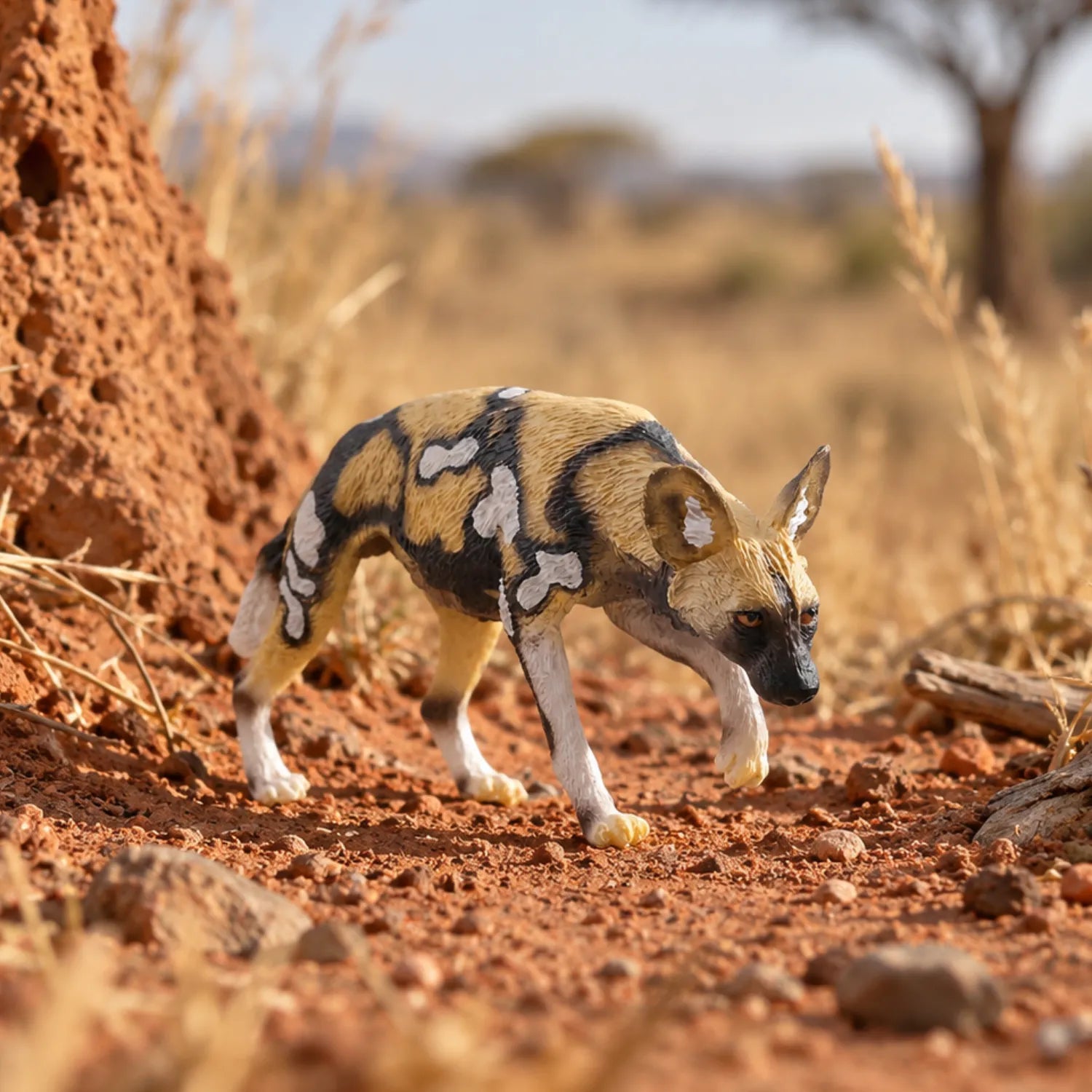
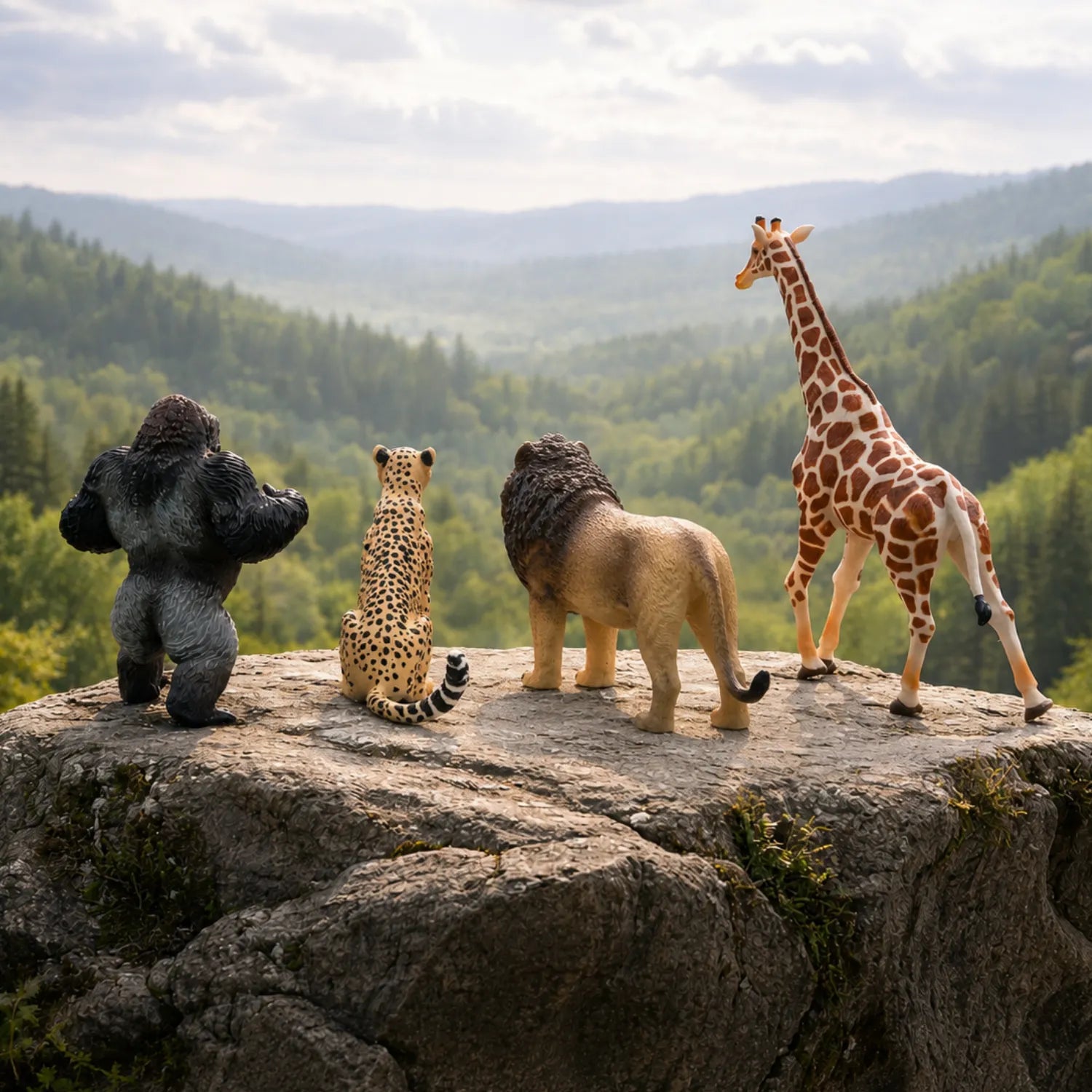
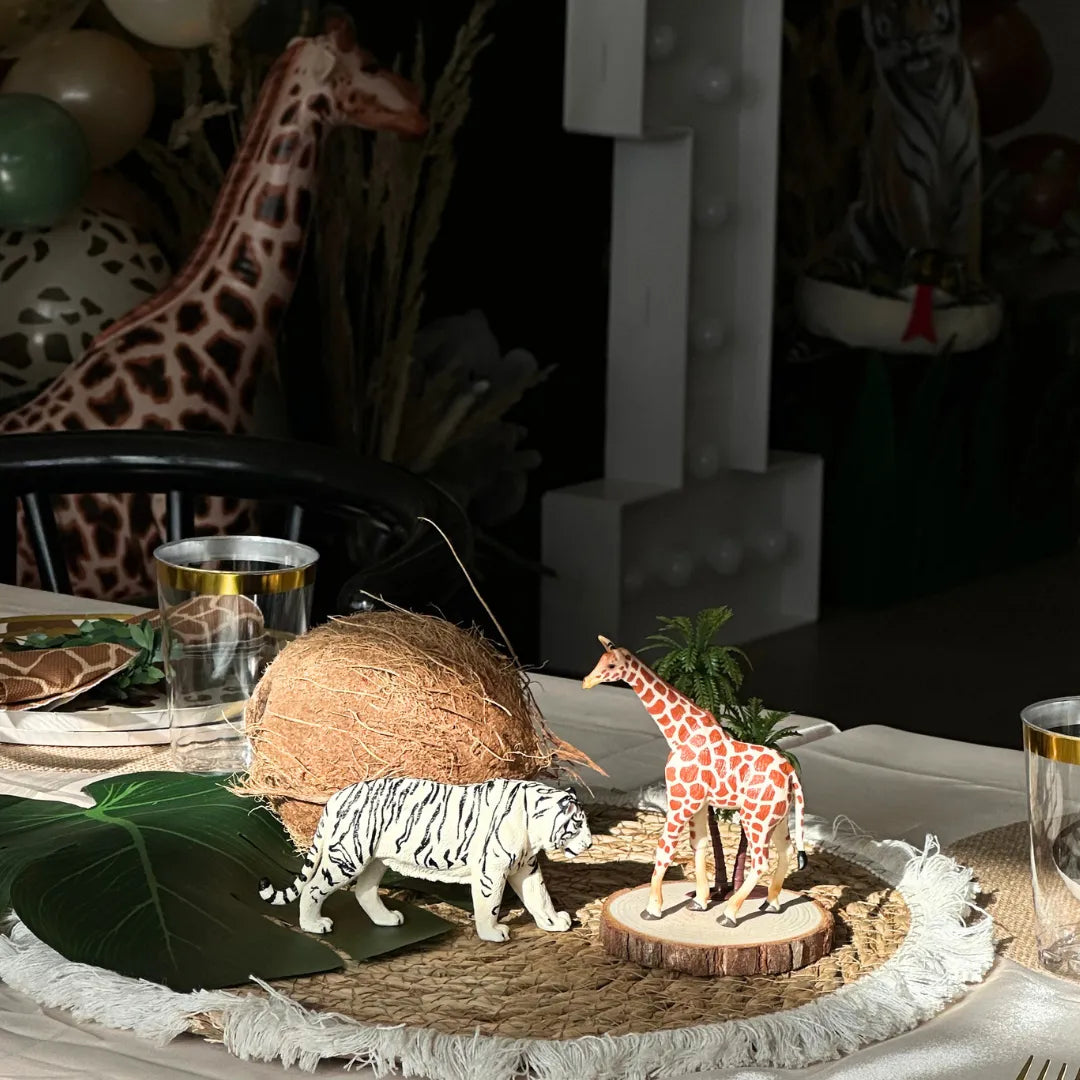
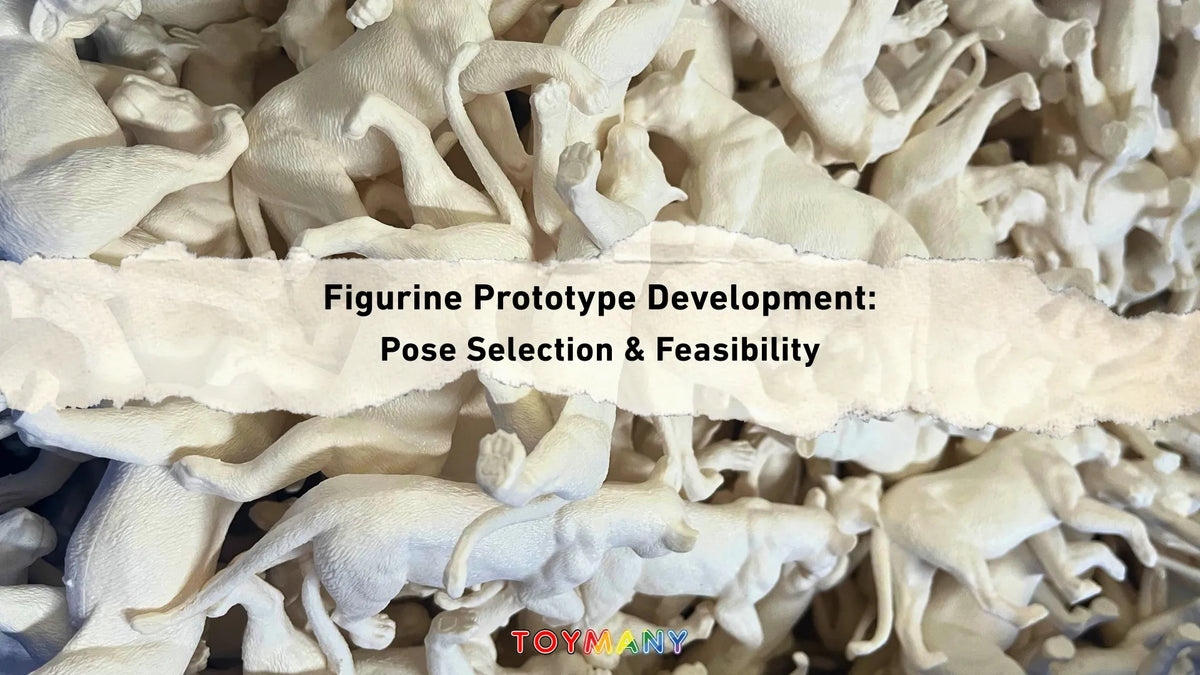
Before a figurine becomes a finished product, one of the most critical decisions happens at the earliest design stage: selecting a pose that is both visually natural and structurally feasible for production.
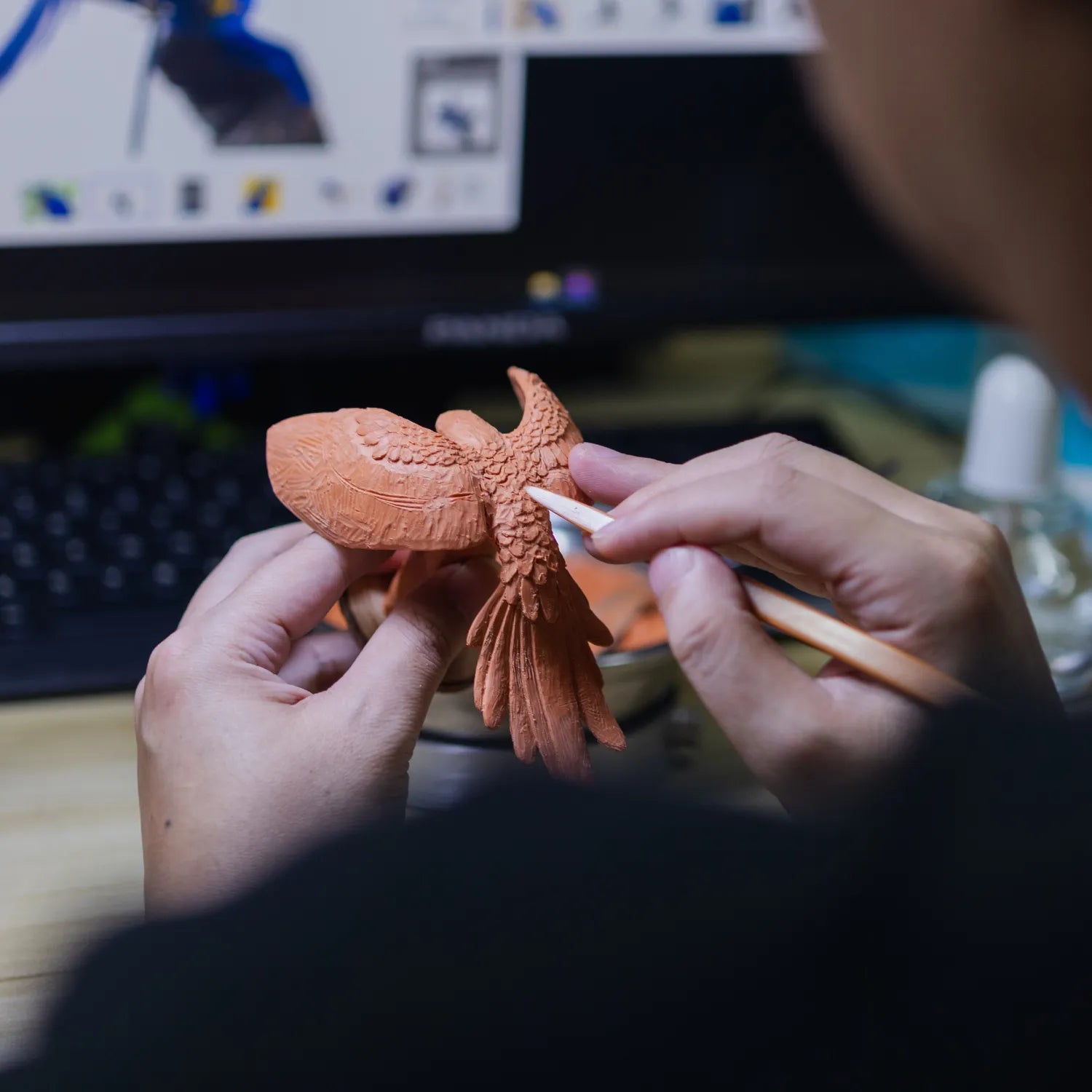
At Toymany, figurine prototype development is not only about capturing how an animal looks in motion, but also about evaluating whether that motion can be realistically translated into a stable, manufacturable miniature form.
Real animals rarely stay in perfectly balanced positions. They run, stretch, leap, or twist their bodies in ways that are dynamic and expressive. However, not every natural pose can be directly converted into a figurine that maintains balance, durability, and consistency in mass production.
This is why pose selection becomes a key part of the development process. Each design must be carefully assessed from both an anatomical and structural perspective to ensure it remains faithful to the animal while also being suitable for production at scale.

How Real Animal Anatomy Influences Pose Selection in Figurine Design
When we start selecting a pose for an animal figurine, we always begin with real animal anatomy. Instead of focusing only on how the pose looks, we first study how the animal’s body actually works in motion.
We look at several key aspects of anatomy to guide our decisions:
- How bones connect and support movement
- How joints control flexibility and direction
- How muscles influence posture and balance
For example, when working with primate figures such as the chimpanzee, we closely analyze how their upper-body-dominant posture still relies on subtle lower-body support.
This becomes especially clear when analyzing primate movement patterns. In Toymany chimpanzee figurine design, we translate this natural movement into a controlled upright stance that preserves anatomical intention while ensuring stability in miniature form.

This helps us understand not just how an animal looks in a specific moment, but how it naturally moves across different actions such as running, resting, jumping, or turning.
In real life, animal movement is often dynamic and unpredictable. Limbs may extend beyond stable positions, the spine may twist, and weight distribution constantly shifts. These natural behaviors are important for realism, but they also create challenges when we translate them into miniature figurines.
So instead of copying the movement directly, we interpret it. We simplify the motion and adjust structural elements so the pose still feels natural, but remains stable and manufacturable at scale.

One key factor we always consider is weight distribution. We analyze where the animal naturally carries its weight—usually through the legs or lower body—and use that as a reference for stability in miniature form.
Through this process, we make sure every pose is not only visually accurate but also structurally reliable for production. We always start from our full figurine production process to understand how each pose begins at the development stage.
Translating Animal Movement Into Miniature Design Language
When we design a figurine pose, we do not copy animal movement directly. Instead, we translate it into a simpler and more controlled design that works for miniature production.
Real animal movement is often too complex or too extreme to reproduce directly. A running cheetah, a stretching Chimpanzee, or a turning wolf all involve rapid shifts in balance, muscle tension, and body extension. While these actions are visually powerful, they are not always suitable for small-scale sculpting.
During this translation process, we focus on a few key adjustments:
- We simplify the overall body flow so the pose remains readable
- We adjust extreme joint angles to improve stability
- We fine-tune the center of balance so the figurine can stand properly
This helps us keep the feeling of movement while making sure the pose can be physically produced without structural issues.
We also consider visual clarity. A pose that is too complex may lose its expression once it is reduced to a miniature scale, so we always make sure the movement can still be understood at first glance.


Which Poses Are Feasible — and Which Are Not
When we evaluate a pose during figurine prototype development, one of the most important steps is deciding whether it can actually be manufactured at scale. Not every natural animal pose is suitable for figurine production, even if it looks realistic in reference images.
The difference usually comes down to structure and stability. Some poses naturally support a stable base, while others rely on movement that is too dynamic or unbalanced for miniature design.
🟡 Feasible Poses (Structurally Stable Designs)
We consider a pose feasible when it can stand naturally and maintain balance without additional support. These poses usually share a few common characteristics:
- The body has a clear support point, usually through all four legs or a grounded base
- The center of gravity is stable and does not shift too far outside the body
- The movement is controlled rather than extreme
Typical examples include standing, walking, sitting, or resting poses. These allow us to maintain both realism and production stability at the same time.
🔴 Non-Feasible Poses (High Structural Risk Designs)
Some animal poses present higher structural challenges during figurine development. These poses are not impossible to produce, but they require additional engineering adjustments to ensure stability and consistency in mass production.
These poses usually involve more complex movement or reduced structural support. In these cases, the figurine cannot rely on simple balance and must depend on careful internal design and reinforcement.
Typical high-risk characteristics include:
-
Limited support points
The figure cannot naturally stand without additional structural planning or hidden support. -
Extreme body extension or motion
Poses that involve jumping, stretching, or airborne movement increase stress on connection points. -
Unbalanced weight distribution
When the center of gravity shifts too far from the base, stability becomes harder to maintain.
In these situations, we do not reject the pose. Instead, we evaluate how to adapt it. This may include adjusting body angles, reinforcing key connection areas, or slightly modifying the pose while keeping its original movement intention.
The goal is always to preserve the expression of the animal while ensuring the figurine can be safely and consistently produced at scale.
🟢 Finding the Balance Between Realism and Stability
The goal is never to remove realism. Instead, we adjust the pose so it can work within physical manufacturing limits.
We carefully refine:
- Body angles
- Support distribution
- Motion intensity
This allows us to keep the essence of the animal’s movement while ensuring the figurine remains stable and suitable for consistent production.

🟣 How We Validate Pose Feasibility in Real Production
In our figurine prototype development process, we do not judge pose feasibility only through visual reference. Instead, we evaluate how each pose behaves when translated into structural form, especially under miniature constraints.
This becomes particularly important when dealing with dynamic poses that look natural in real animal movement but require engineering adjustments in figurine production.
A clear example of this is our crouching tiger figurine design.
While crouching appears to be a natural and stable position in real animals, in miniature form it introduces multiple structural challenges. The low body posture concentrates weight toward the front legs, and the extended back alignment requires careful balance adjustment.
In Toymany’s Crouching Tiger development, we refine the limb angles and slightly adjust the body compression to ensure the figurine remains stable without losing its natural tension and movement expression. If you want to, click and look through more details of this tiger on our YouTube channel!

Balancing Realism, Stability, and Manufacturability
In figurine prototype development, selecting a pose is never based on a single factor. Instead, we always need to balance three key requirements at the same time: realism, stability, and manufacturability.
These three elements often influence each other, and improving one can sometimes create challenges for the others. For example, a highly realistic pose may reduce structural stability, while a highly stable pose may limit expressive movement. This is why pose selection is always a process of balance rather than absolute optimization, as also reflected in animal movement studies from the Smithsonian National Museum of Natural History.
🟡 Realism: Capturing the Natural Expression of the Animal
We always start with realism. The figurine must reflect how the animal naturally moves and behaves in its environment. This includes body posture, movement flow, and overall expression.
However, realism alone is not enough if the pose cannot be physically supported in miniature form.
🔵 Stability: Ensuring the Figurine Can Stand and Hold Its Form
Stability is essential for both production and end-user experience. A figurine must be able to stand securely without external support and maintain its shape during handling, packaging, and display.
To ensure this, we evaluate:
- weight distribution
- support points
- structural balance
If a pose is visually strong but unstable, we adjust the structure while preserving its core movement.
🟢 Manufacturability: Making the Design Suitable for Mass Production
Even if a pose looks realistic and stable, it must still be feasible for consistent production. Manufacturability focuses on whether the design can be reproduced at scale with stable quality.
This includes:
- mold structure limitations
- assembly complexity
- consistency across batches
We refine poses when necessary to ensure they can be reliably produced without increasing risk or variation.
🧠 Finding the Right Balance
The final pose is never the result of maximizing only one factor. Instead, we carefully adjust all three until they reach a balanced outcome.
Whether it is the shape of the head, the flow of the body, or the overall posture, the silhouette ensures that the figurine communicates its identity before details are even noticed.
Beyond structural feasibility, we also evaluate how poses perform visually at a distance.
For example, in our stretching jaguar figurine design, the overall body line and tail extension create a strong silhouette that remains recognizable even before fine sculpted details are noticed. Even at a miniature scale, the pose can still communicate motion and identity clearly through its outline alone.

In most cases, we slightly reduce extreme realism to improve stability, and we simplify certain structural elements to ensure manufacturability, while still preserving the overall natural expression of the animal.
This balance is what allows us to turn real animal movement into figurines that are both visually expressive and suitable for consistent production at scale.

FAQ
Q1: How do we decide if an animal pose is suitable for figurine development?
We evaluate each pose based on three key factors: realism, stability, and manufacturability. A pose must not only reflect natural animal movement but also be structurally stable and suitable for consistent production at scale. If a pose creates balance or structural issues, we adjust it rather than using it directly.
Q2: Why are some realistic animal poses not suitable for figurine production?
Some animal poses in real life involve extreme movement, fast motion, or unstable weight distribution. While these look natural, they can create structural challenges in miniature form. In figurine production, we need to ensure the pose can stand securely and be reproduced consistently, which may require adjustments to the original movement.
Q3: How does Toymany ensure structural feasibility in figurine design?
We start by analyzing animal anatomy and movement patterns, then translate them into simplified and balanced design structures. During this process, we adjust body angles, support points, and weight distribution to ensure each pose is stable and suitable for production. This helps us maintain both realism and manufacturing reliability.
Q4: What makes a figurine pose suitable for mass production?
A production-ready pose must be structurally stable, visually clear, and reproducible across multiple batches. It should have a clear support base, balanced weight distribution, and a design that does not rely on fragile or overly complex structures. These factors ensure consistent quality during mass production.
Q5: Why choose Toymany as a figurine supplier for pose development?
We combine animal behavior research with manufacturing constraints to design figurine poses that are both realistic and production-friendly. Our figurine prototype development process ensures that every design is evaluated for structural feasibility before entering production, helping maintain consistency, stability, and quality at scale.

Leave a comment
All comments are moderated before being published.
This site is protected by hCaptcha and the hCaptcha Privacy Policy and Terms of Service apply.